In 2017-18, about one in six Gadsden County↗ET students was chronically absent. In 2023-24, it is more than one in two.
Gadsden County's chronic absenteeism rate has risen from 15.3% to 56.0% in six years, a 40.7 percentage-point increase that represents the steepest deterioration of any Florida school district. The rate has nearly quadrupled. More than half the students in this small, rural Panhandle county — 2,741 of 4,898 — are missing at least 10% of their enrolled school days.
Part of the Florida Chronic AbsenteeismET series.
Every year, worse
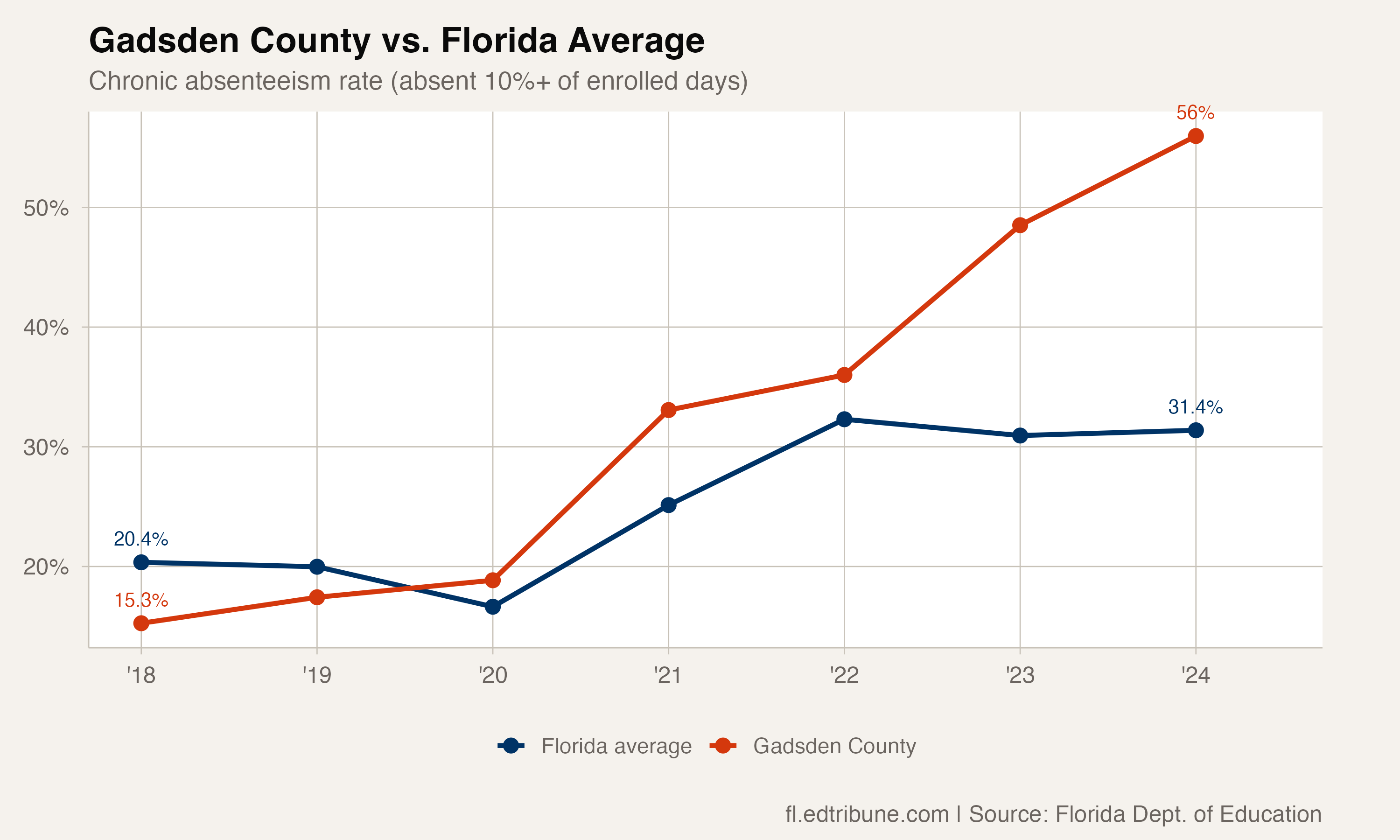
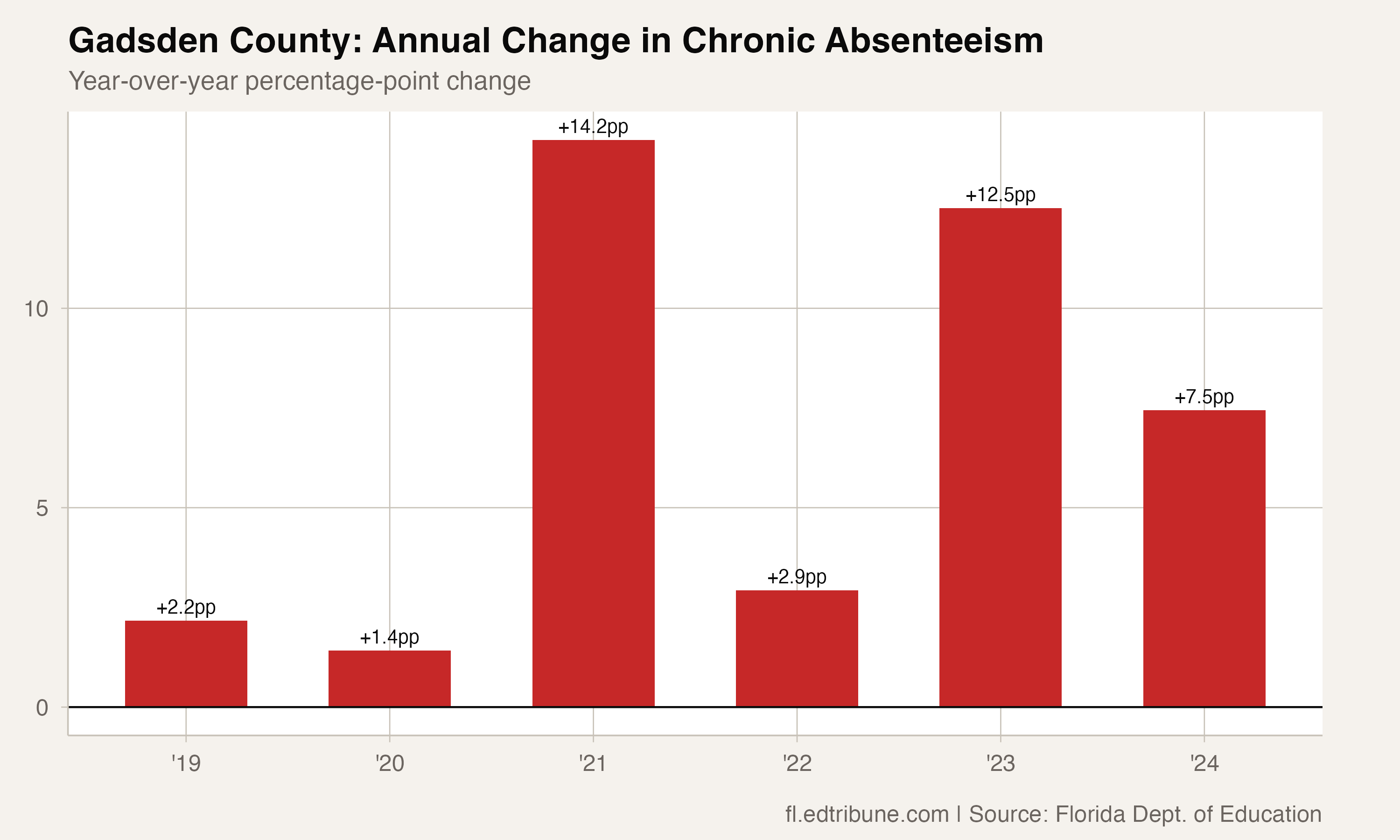
The trajectory is unbroken. Gadsden's chronic rate has risen every single year since 2017-18, including through the pandemic dip that appeared in many districts when truncated school calendars reduced the denominator. The increases are not small: 14.2 points in a single year (2020 to 2021), another 12.5 points the year after that (2022 to 2023). Even in 2023-24, a year when many Florida districts hoped the worst was over, Gadsden added another 7.5 percentage points.
What began as a manageable problem — 15.3% in 2018 was below the state average at the time — has become something that threatens the viability of the district's educational mission. When a majority of students are chronically absent, the absent students become the norm and consistent attenders are the exception. Teachers cannot build lessons on prior material when most of the class missed the prior lesson.
A shrinking district with a growing crisis
The raw numbers compound the story. Gadsden has been losing enrollment steadily — from 5,844 students in 2018 to 4,898 in 2024, a 16.2% decline. The chronically absent count, meanwhile, has tripled: 892 students in 2018, 2,741 in 2024.
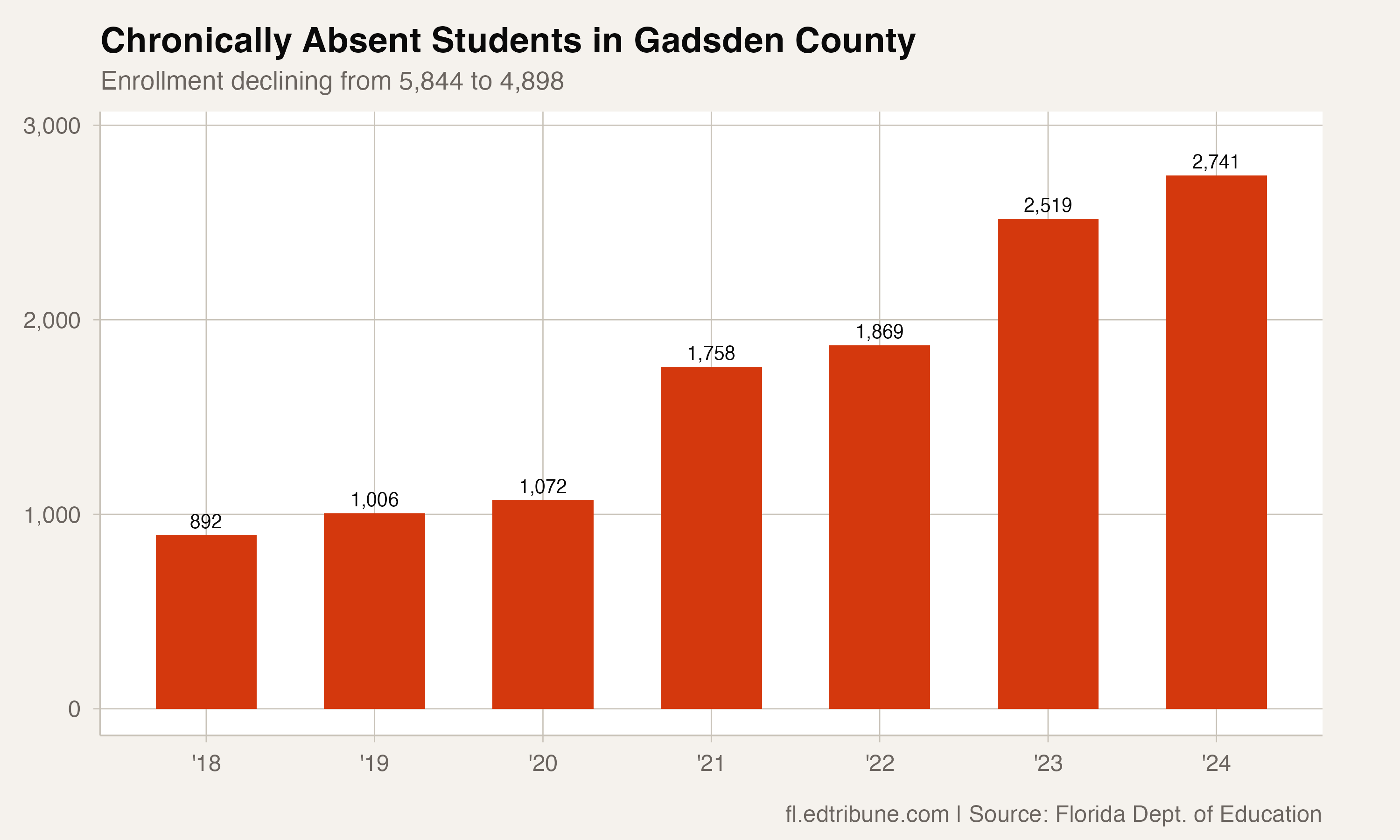
The dual trajectory of declining enrollment and rising absenteeism creates a fiscal vise. Fewer students means less state funding. Higher absenteeism means lower average daily attendance, which further reduces revenue in states where funding formulas incorporate attendance. Gadsden is losing students and simultaneously losing the students who remain to chronic absence.
Rural peers, different paths
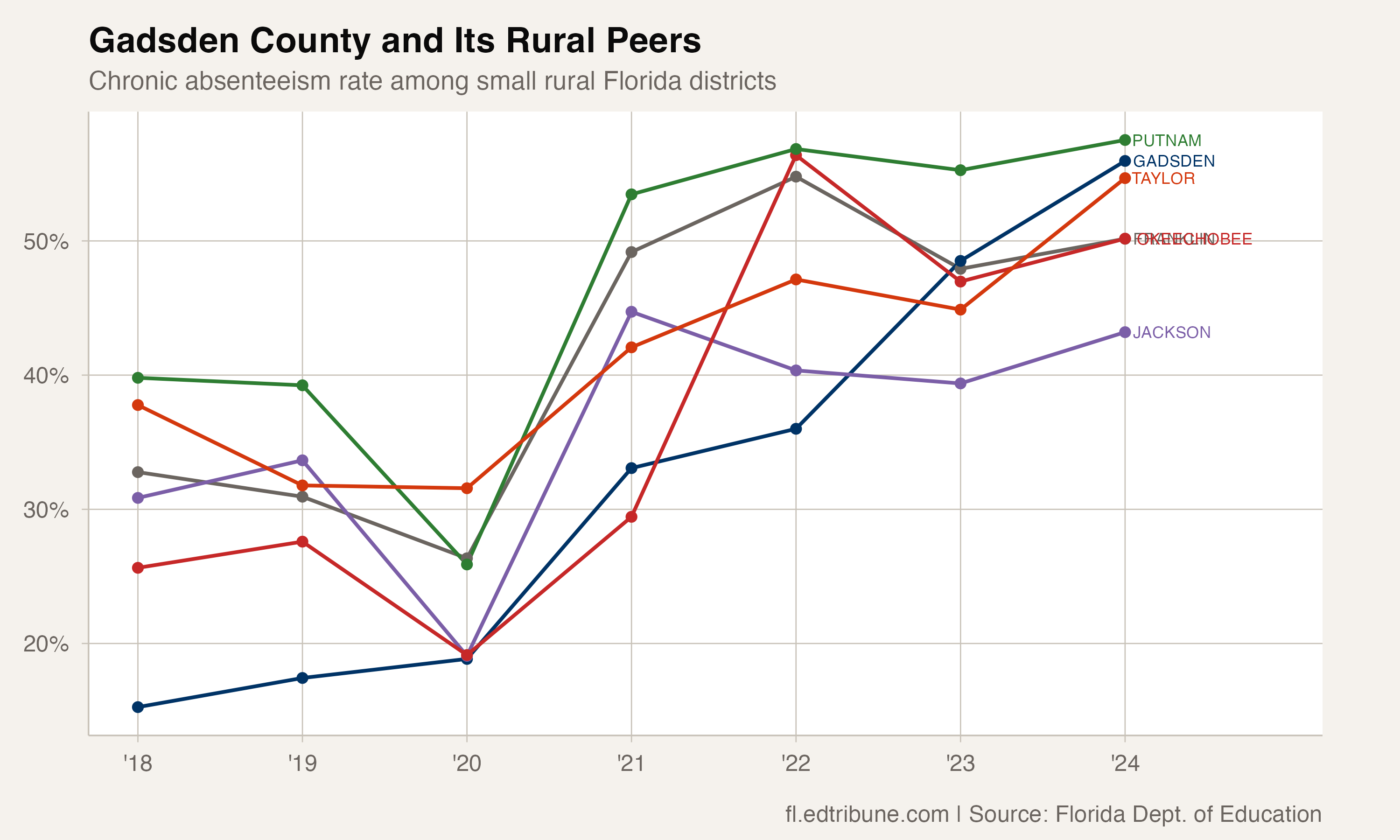
Gadsden is not the only rural Florida county with high chronic absenteeism, but its trajectory stands apart. Putnam County (57.5%) and Taylor County (54.7%) also exceed 50%, and Franklin (50.2%) sits right at the threshold. But Gadsden's starting point was dramatically lower. In 2018, Gadsden was at 15.3% while Putnam was already at 39.8%. Gadsden's rise of 40.7 points dwarfs Putnam's increase of 17.7 points.
The comparison matters because it suggests that Gadsden's collapse is not simply a story of chronically underfunded rural schools grinding down over time. Something accelerated in Gadsden that did not accelerate — or at least not as violently — in its peers.
Gadsden County sits in the Panhandle, just west of Tallahassee. It is Florida's only majority-Black county, with a poverty rate well above the state average. The district is small enough that a single employer closing or a housing development turning over can shift attendance patterns in ways that barely register in Miami-Dade's numbers.
What 56% means
At 56.0%, the question for Gadsden is no longer "how do we reduce chronic absenteeism?" It is "how do we run a school system when most students are not reliably in the building?" The usual attendance interventions — letters home, parent conferences, mentoring programs — were designed for a world where chronic absence was a minority condition. Gadsden is past that point.
The district graduated from the state's "F" school grade in recent years, but school grades primarily reflect test scores and are calibrated to reward progress in high-performing populations. They tell very little about whether students are physically present.
Detailed code that reproduces the analysis and figures in this article is available exclusively to EdTribune subscribers.
Discussion
Sign in to join the discussion.
Loading comments...