Correction (2026-07-23): An earlier version of this article said the 2024 cohort surpassed the previous record by 8,758 students. The previous high was 212,240, set in 2019, so the 2024 cohort of 217,248 exceeded it by 5,008. The 8,758 figure measured the increase over the 2023 cohort.
Florida graduated 89.7 percent of its 2024 senior class, the highest legitimate rate in state history and a mark that eclipses even the pre-pandemic high of 86.9 percent set in 2019.
The word "legitimate" matters here.
During the 2019-20 and 2020-21 school years, Florida waived its statewide standardized assessment requirement for graduation. Students who might not have passed the FAST ELA Level 3 or its predecessor received diplomas anyway. The rate soared to 90.0 percent in 2020 and 90.1 percent in 2021, numbers that looked like progress but were built on a temporary policy change.
When assessment requirements returned in 2021-22, reality reasserted itself. The rate dropped 2.8 percentage points to 87.3 percent in a single year, the sharpest decline in the state's modern records.
The recovery that followed
What happened next is the real story. Rather than stagnating at the post-correction level, Florida's graduation rate began climbing again immediately. The state gained 0.7 points in 2023 and another 1.7 points in 2024, reaching 89.7 percent without the benefit of waived requirements.
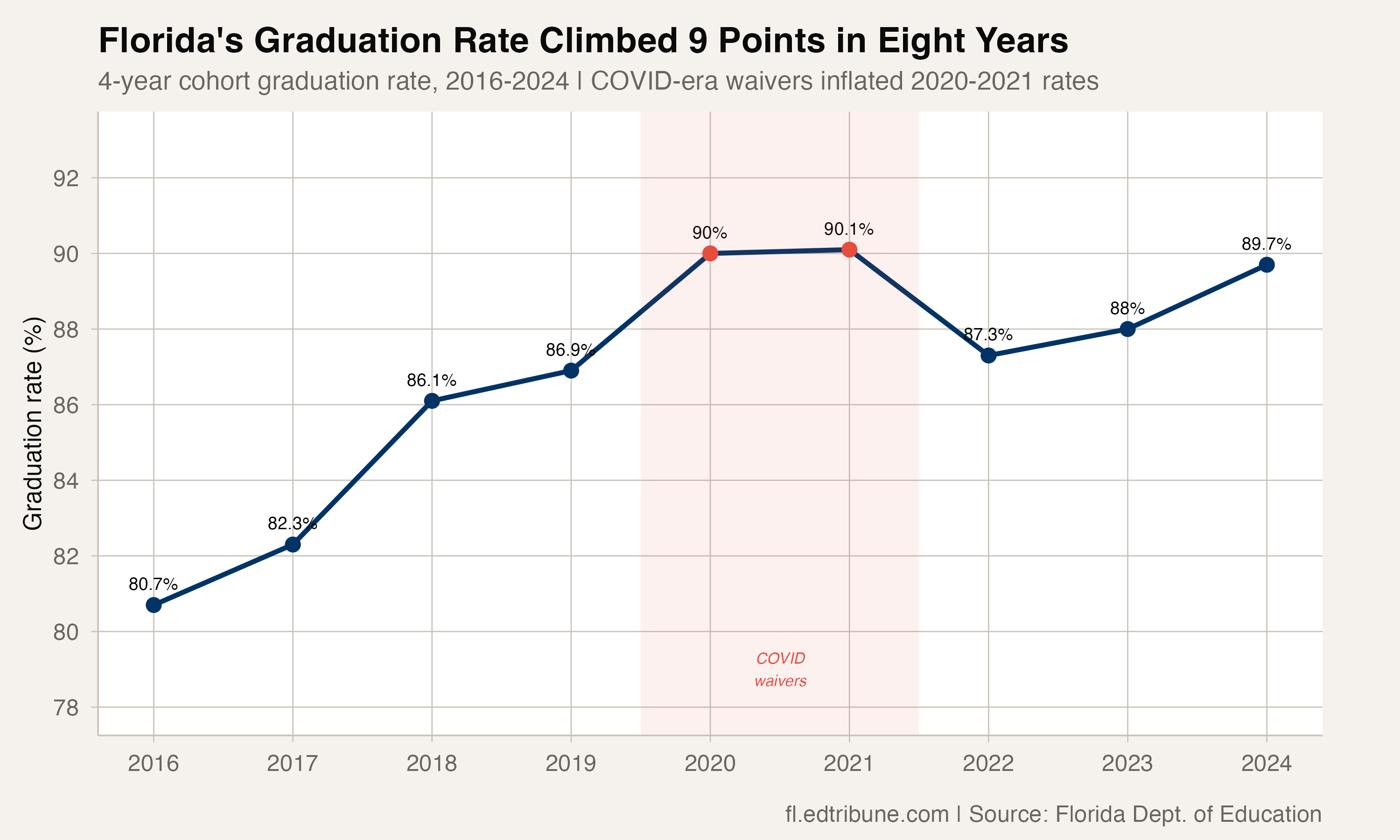
The trajectory is worth parsing year by year. From 2016 to 2019, Florida averaged gains of about 2 percentage points annually, driven by policy investments in dropout prevention and credit recovery programs. The COVID waivers then juiced the numbers by roughly 3 points. The 2022 correction wiped out all of the artificial gains and then some. But the underlying improvement engine kept running.
By 2024, the state had recovered nearly all of the ground lost in the correction, putting up a rate just 0.4 points below the waiver-inflated peak. The difference is that the 2024 number was earned under normal testing conditions.
A record class
The 2024 graduating cohort of 217,248 students was the largest Florida has ever tested, surpassing the previous high, set in 2019, by 5,008 students. The simultaneous growth in both cohort size and graduation rate is unusual. In many states, larger cohorts tend to depress rates as more marginal students are included. Florida managed the opposite, producing 194,968 graduates, also an all-time high.
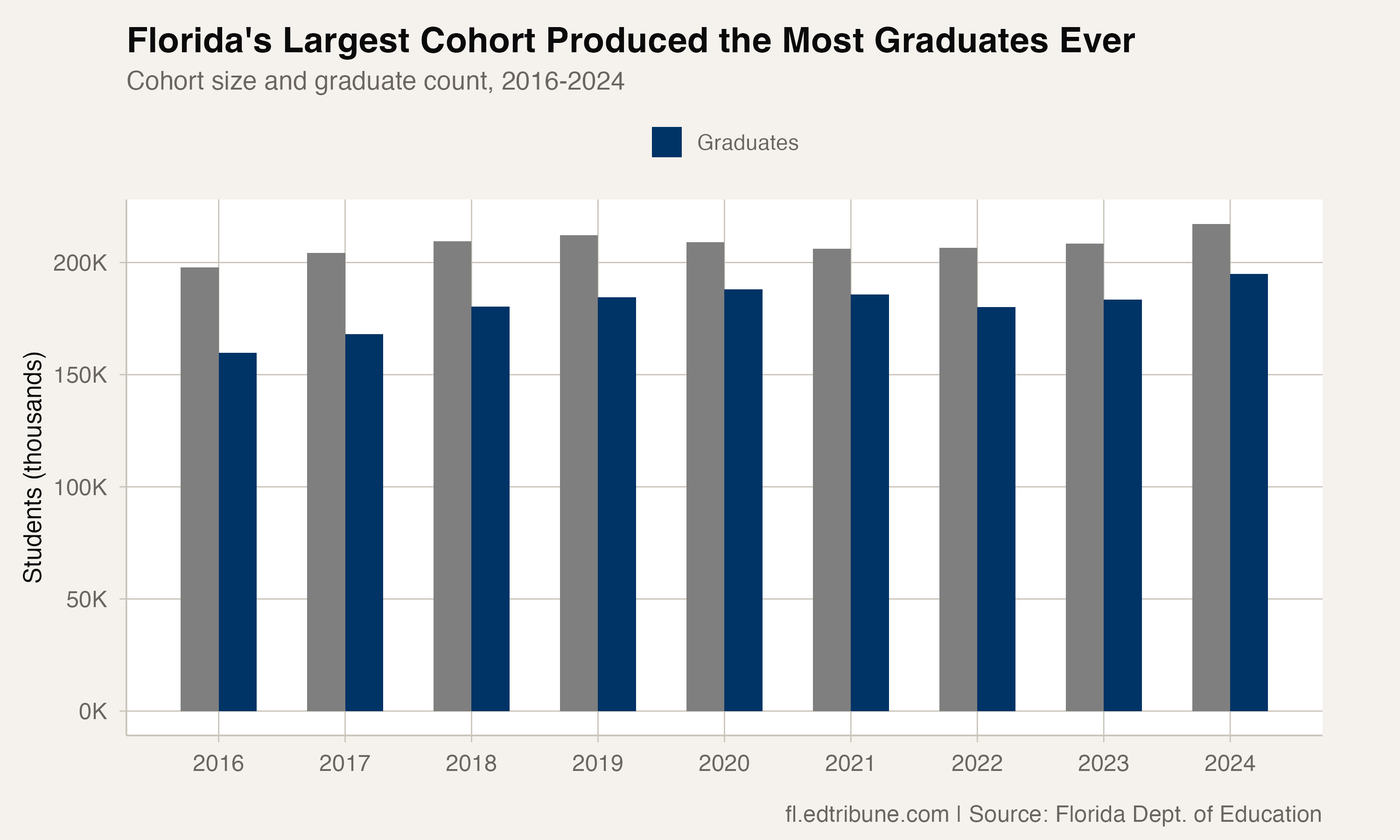
The 11,552 additional graduates in 2024 compared to 2023 represent the largest single-year increase since 2018, when the rate jumped 3.8 points. Over the full nine-year span from 2016 to 2024, Florida has produced more than 1.6 million graduates.
The year-over-year pattern
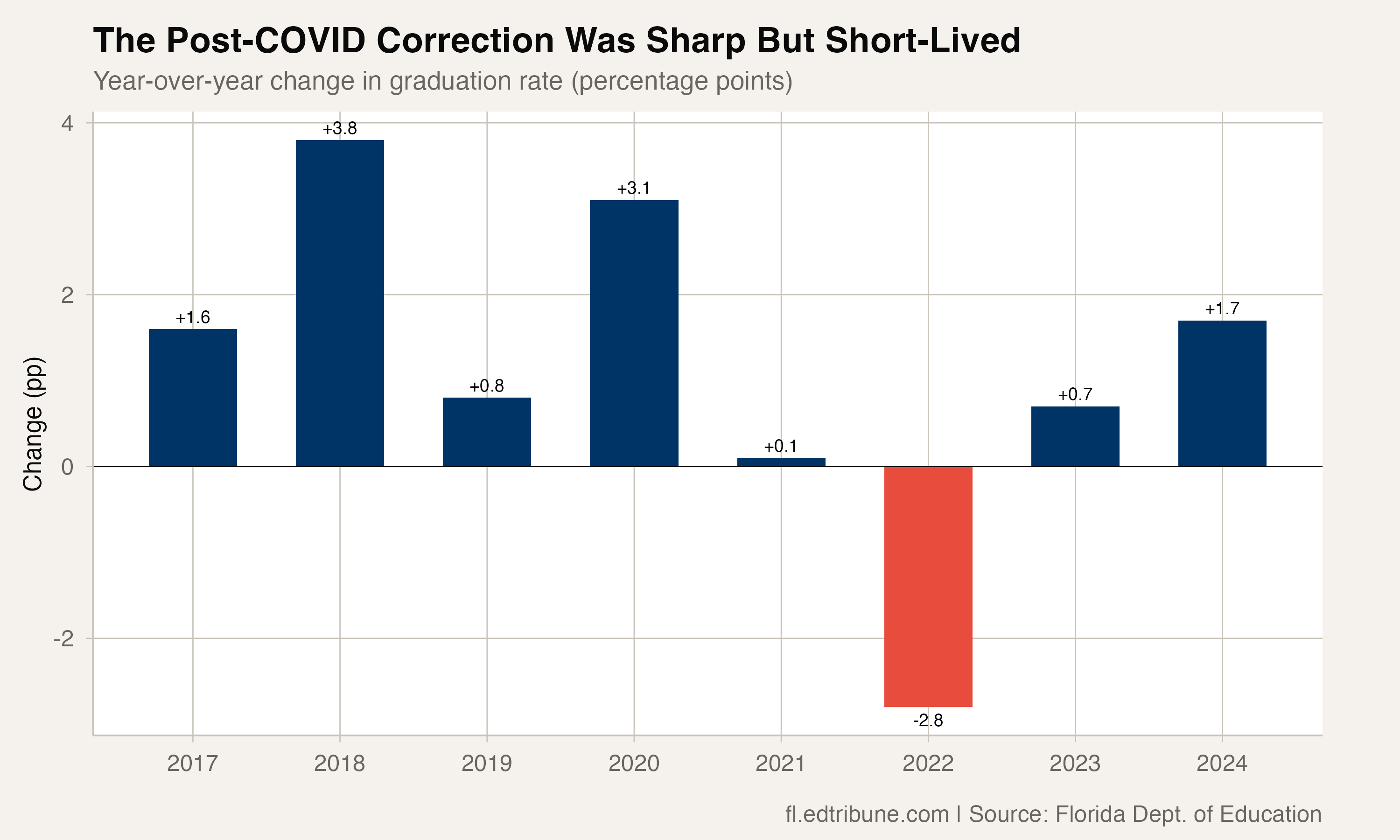
The annual changes tell a clear story of three phases: steady improvement from 2016 to 2019, an artificial spike followed by a sharp correction from 2020 to 2022, and renewed organic growth in 2023 and 2024. The state is now on a trajectory that, if sustained, would push the rate above 90 percent without any special accommodations.
Preliminary state data suggests this has already happened. Florida's Department of Education reported a 92.2 percent graduation rate for the 2024-25 school year, which would represent the first time the state has genuinely exceeded the 90 percent mark.
What the number means, and what it does not
A 9-point improvement over eight years is significant by any measure. It means roughly 18,000 additional students per year are leaving high school with a diploma compared to 2016. Behind that aggregate, however, are wide variations by district, by subgroup, and by the type of diploma earned.
Some districts have improved by more than 25 percentage points in this period. Others have declined. The equity gaps between subgroups have narrowed dramatically for some populations and remain stubbornly wide for others.
Those stories play out across the rest of this series.
Detailed code that reproduces the analysis and figures in this article is available exclusively to EdTribune subscribers.
Discussion
Sign in to join the discussion.
Loading comments...